Published on 3.07.2026
Rita Davis is a graphic designer based in Tallinn, Estonia, whose work moves between visual identity, editorial design, and community-oriented projects. She holds an MA in Graphic Design from the Estonian Academy of Arts, where she now teaches BA and MA students. Davis works primarily in the cultural field, collaborating with artists, galleries, theatre companies, and publishers across different contexts.
In the north and northeast of Brazil, there is a very old tradition, dating back to the 18th century, in which an ox – or a puppet in the shape of an ox – is built, carefully embroidered, and brought out onto the streets. This cultural manifestation is called Bumba-meu-Boi, and its main idea is devotion to Saint John the Baptist.
During the festivities, I am swallowed by the crowd – people of all ages. I see old women fanning themselves on plastic chairs. Groups of teenagers hanging out in the street with beer sweating in their hands. Lots of beer, plenty of cachaça, tiquira and quentão.1 There are regional food stalls everywhere, hot food freshly prepared on the spot. Everyone is waiting – not calmly, but with electric anticipation. Then it happens. From somewhere in the distance, I hear the wooden clicks TATATATATATATA of the matracas,2 the tinkling sound of the maracá3 and the deep beats on the pandeiros4 echoing. The sound grows louder, closer and suddenly I see musicians and dancers emerging like a burst of colour, with their costumes glittering, feathers trembling, gigantic headpieces swaying. The crowd opens instinctively. And that’s when I know – the ox is coming, ready to tease, to dance, to play with us all.
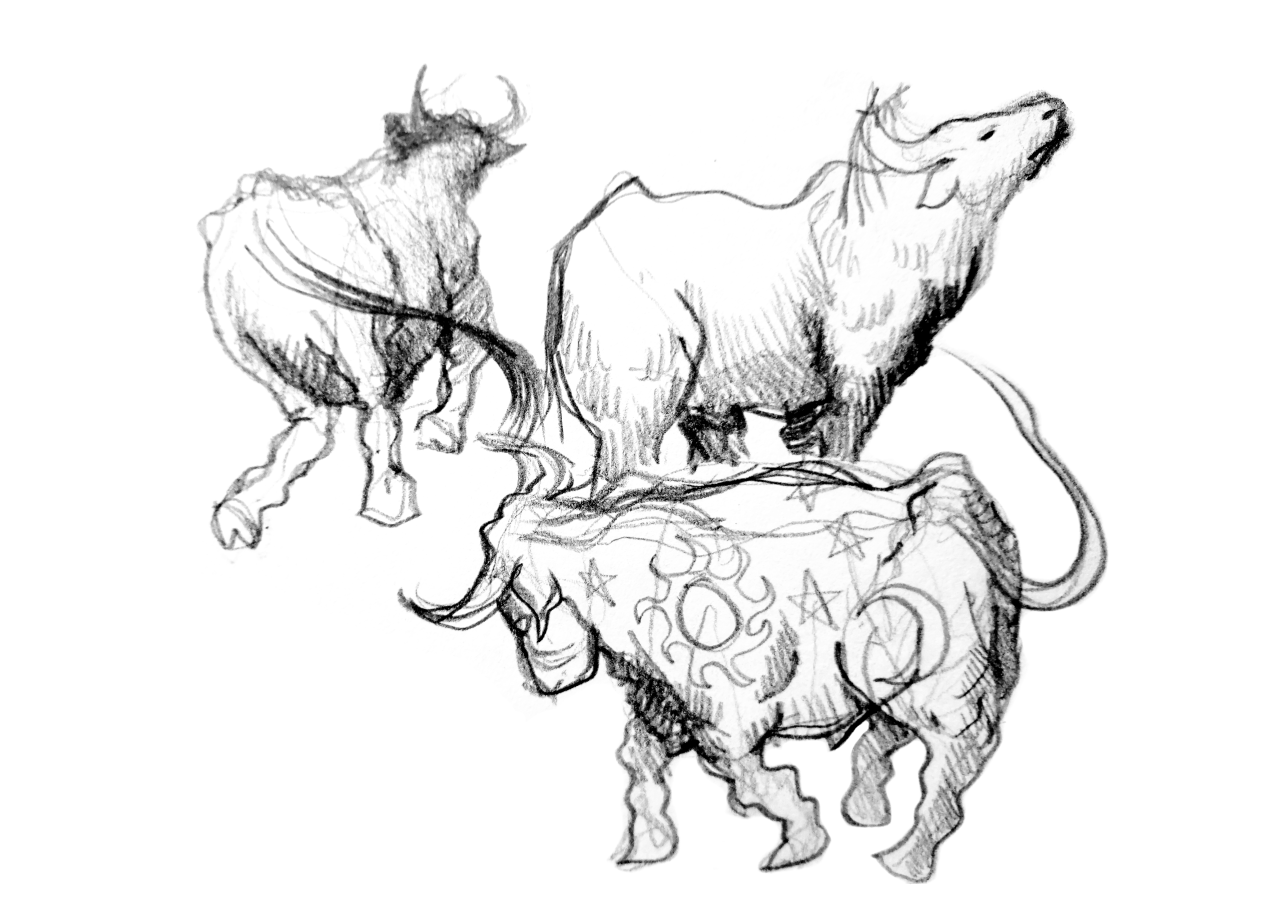
On a cattle farm in Maranhão,5 there lived a couple named Mother Catirina and Father Francisco. When Catirina became pregnant, she developed a sudden craving for the tongue of the farm’s most prestigious ox. Wanting to satisfy her, Father Francisco killed the animal, even though it belonged to the master of the farm. When the master discovered the ox was dead, he was furious and demanded justice. In order to fix the situation, healers, pajés6 and mystical creatures from the forest were called to perform rituals and prayers. Through their intervention, the ox was brought back to life. What began with fear and anger ended in relief and celebration: with music, dancing, and a great celebration marking the resurrection of the ox.
This story, written by me, of Mother Catirina and Father Francisco is the core narrative of this festival. The legend has many variations, depending on where it is told and by whom – but they all have one thing in common: the death and resurrection of an enchanted animal, the ox. The celebration takes place, every year, in three parts: the first part, in April, consists of the birth of the ox. In the second part, in June, it is baptized. In the final part, in September or October, the ox dies, reflecting the cycle of life itself. As the author Beatriz Furlanetto explains further: “The ox play represents the cycle of continuity, the ox dies in order to be resurrected every year: a narrative that seems to transform death into relief and hope, a circularity in which life and death meet in the miracle of resurrection, and the ox takes on a supernatural character – the meeting of the sacred and the profane.”7
This tradition has been sustained for centuries by different cultural groups and peripheral communities8 who have resisted cultural erasure, passing down knowledge, songs, dances, and crafts from generation to generation. Deeply marked by Brazil’s colonial history, Bumba-meu-Boi emerged “amid social struggles, stirred by major conflicts between masters and slaves, Indigenous people and whites within the slaveholding patriarchal society of colonial Brazil.”9
Building on this history of resilience, the festivities are not only celebratory but also instances where ways of thinking and making are taken very seriously. Family and community are central: members of the same family and neighbours join together to form a Bumba-meu-Boi group, working on preparations throughout the year, performing, and celebrating side by side. In São Luís do Maranhão10 multiple distinct groups coexist, each with its own traditions, repertoire, and local identity, fostering both collaboration and friendly rivalry.
THE OX PUPPET
The figure of the ox stands at the centre – as a way to think about materiality and craftsmanship. There is no way to explain the universe of the celebration in a few words. What follows focuses on the making of the object-ox and what it reveals about art created within a context: there is a vital impulse. Art is not separated from daily existence; it is embedded in family routines, religious devotion, and communal gatherings.
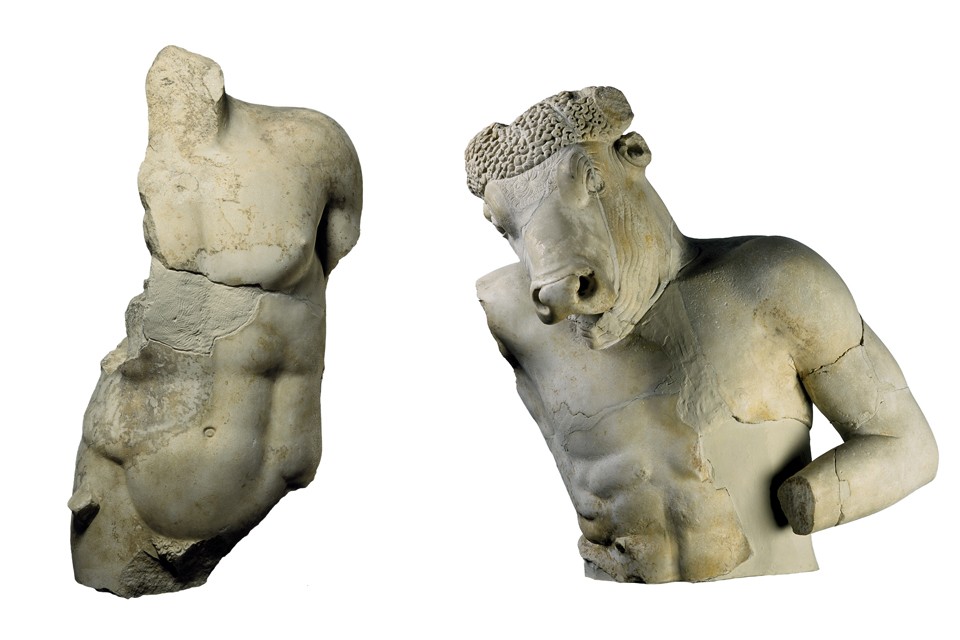
The ox appears again and again throughout human history. It can be found in prehistoric cave paintings, in ancient civilizations, and in mythologies across different regions of the world. This repeated presence suggests the animal has long carried meanings that go beyond its physical form. In many cultures, the ox represents strength, fertility, power, and abundance. It is both a working animal and a sacred one. Because it was essential for agriculture, it supported everyday survival; at the same time, it was linked to divine forces and ritual. Figures such as the Minotaur – half human, half bull – reflect this dual role, placing the ox between worlds: human and animal, earthly and spiritual, symbolically connecting labour and myth.
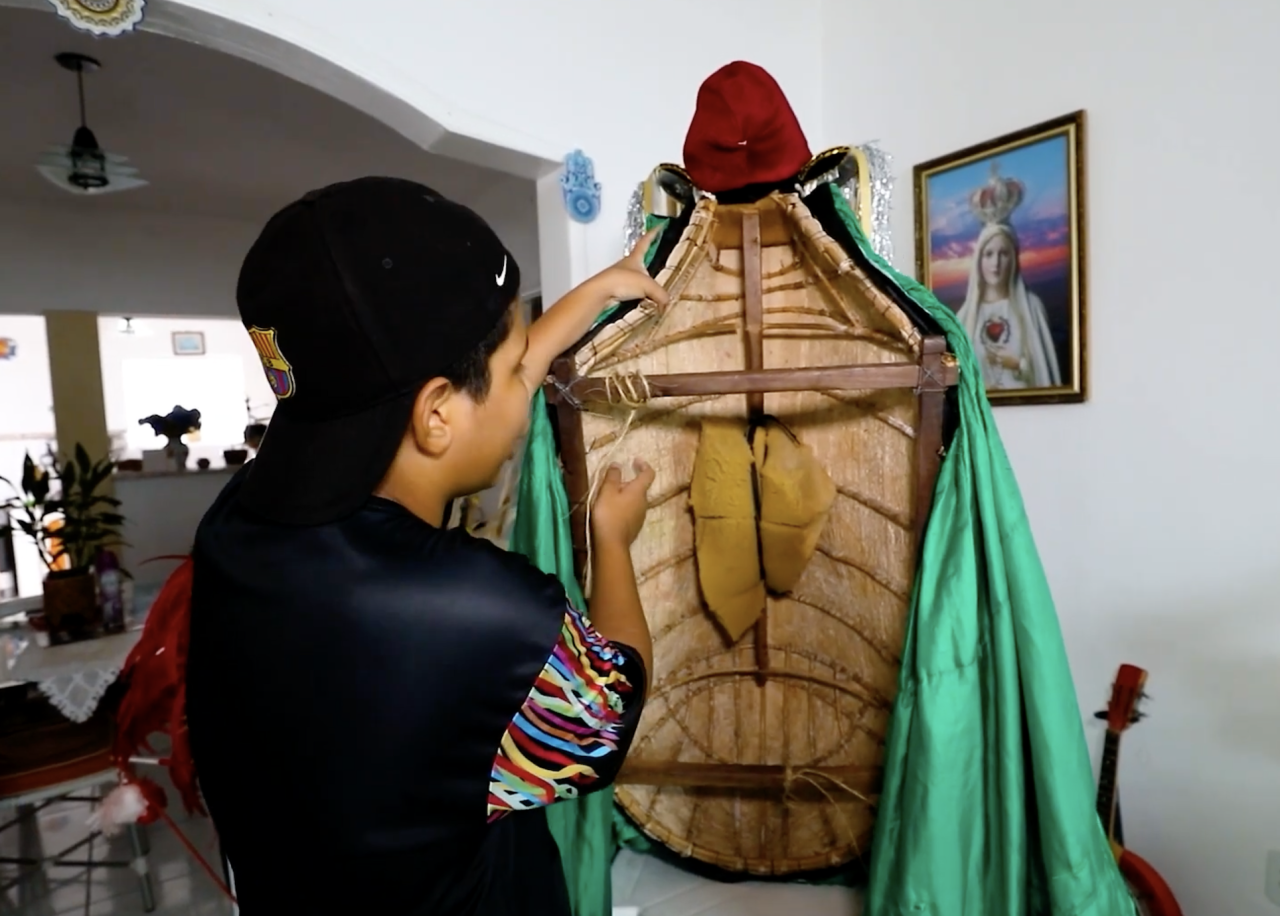
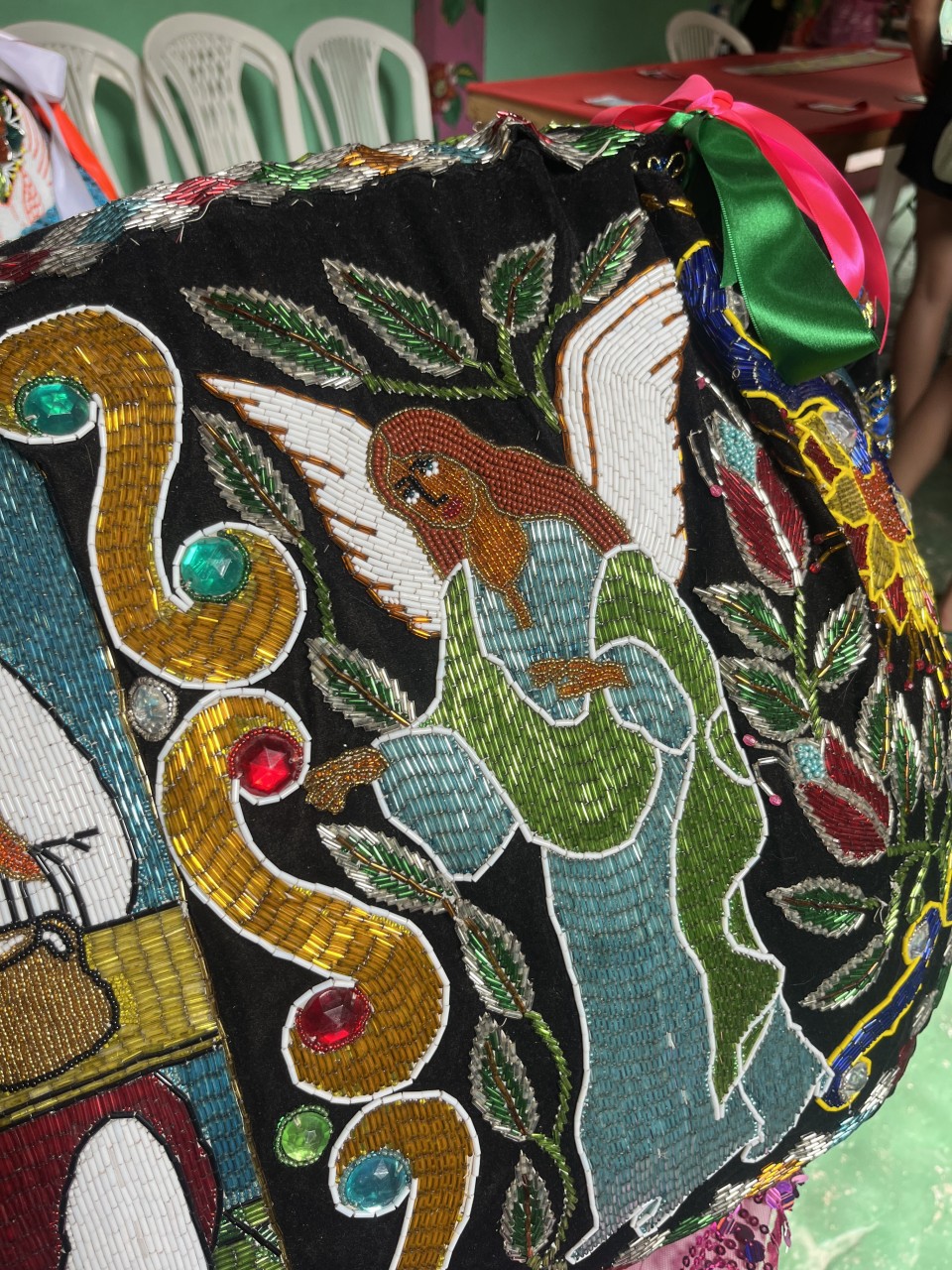
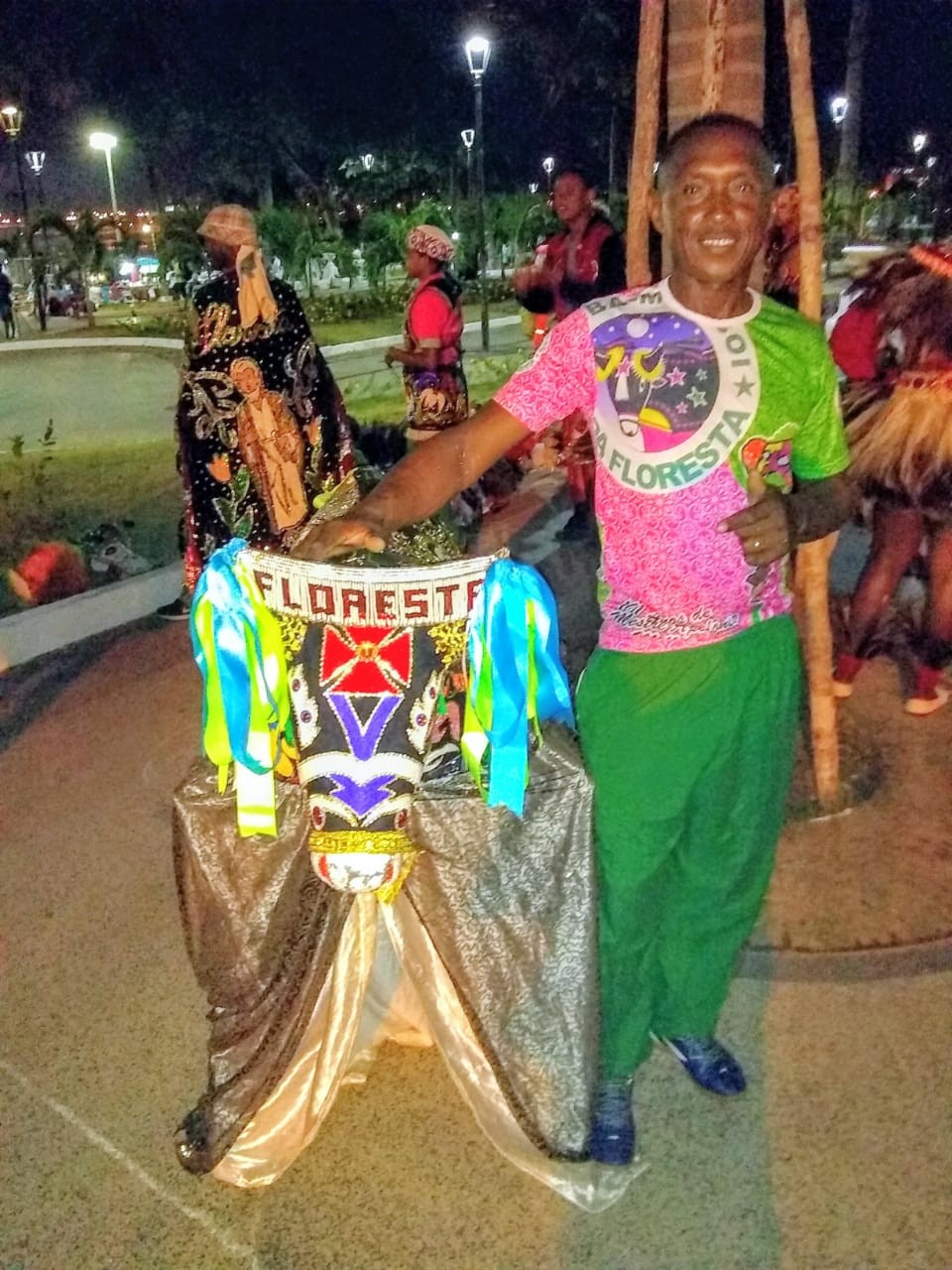
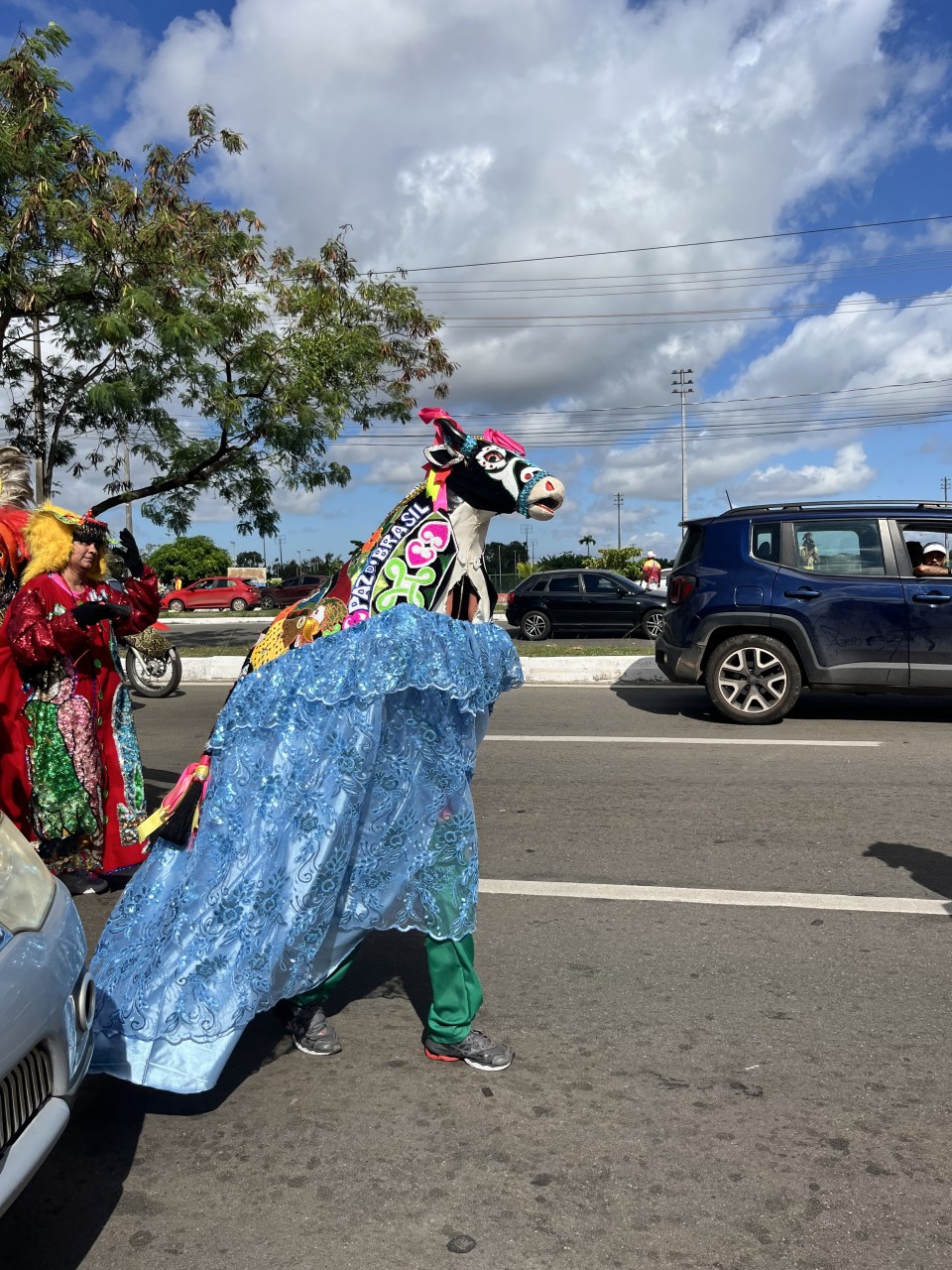
This symbolic density continues in Brazil. The ox in Bumba-meu-Boi is not a living animal, but a constructed one. Its body is a wooden structure covered with black or red velvet. The horns may be real or carved from wood, and the entire surface is carefully embroidered with thousands of beads and sequins, portraying images of saints, angels, plants, buildings, and symbols drawn from African, Indigenous and Catholic traditions. Urban landscapes, nature, important city buildings, as well as tributes to people significant to the community, such as the director11 of the group can also be depicted on the ox. Detailed images of angels and saints are patiently embroidered, one bead at a time. The end result is a work of art with an infinite array of colours, bright and vivid.
The making of this ox takes months and involves many people. The elders possess the knowledge of traditional craftsmanship and teach the younger ones in a cycle of learning by observing and learning by doing. The embroidery is not simply decorative; it tells stories and carries beliefs and memories. Decisions about colours or images may even be guided by prayer, showing how artistic choices are intertwined with spiritual life.
MIOLO
After months of work in the making of the ox, it is still not complete. It still lacks something. During the performances, inside the structure stands the miolo: the person who carries the ox and brings it to life. This role requires strength and endurance, as the structure can be heavy and performances often last hours. Through gesture and rhythm, the miolo gives personality to the ox. Gradually, the audience stops seeing a constructed object and begins to perceive a living presence. This transformation is essential: the ox only fully exists once it is inhabited, the spirit comes from within. In this way, the miolo demonstrates that form alone is not enough. What is invisible – the body inside, the breath, the effort – is what gives it life.
Interview with Benedito Costa Filho (Binga), a miolo from “Bumba-Boi Da Floresta De Mestre Apolônio”12
Can you tell me your name and a bit of your history with the Bumba-meu-Boi?
My name is Benedito Costa Filho, I’m 52 years old. Everybody’s always called me Binga – in the brincadeira13, in the neighborhood. My story is that I’ve always loved brincadeira, since I was a little kid. I just kept getting more and more into it, and I started attending the celebrations, the rehearsals when I was 10, maybe 13 years old. In my family there were already some people who played too, like my father and my sister. So I grew up around that, and I just fell in love with it, you know? When I first joined, I started dancing as Cazumbá.14 After that I became a pandeiro player. Then later I became the miolo, because the other miolo had left, so they needed someone new – and I already knew how to handle it, how to do the choreography. While I was playing the pandeiro, I used to watch the miolo dancing. I learned just by watching, and then one day, I did it myself.
How do you enjoy being the miolo?
Ever since I was just watching the brincadeira, I was drawn to the ox. I always loved the choreography, the way it moves. It’s beautiful to be in there. And there’s a lot of emotion too. Because when you’re inside the ox, as miolo, each person has their own rhythm, their own way of dancing. Each person that has the role of the miolo transforms himself, it’s different for each and every person. The hardest part is the responsibility, you have to be responsible – being miolo is something very special as it’s the centre of the party. It’s also hard because of the weight… the ox weighs a lot, many kilos. You have to carry that weight and still do the choreography and be playful.
How do you prepare yourself before the performances?
Well, some people take a shot of cognac, a shot of cachaça, maybe a beer, that’s part of the preparation… For me, it’s being in good shape, physically and mentally. You’ve got to be well, because there’s so much adrenaline. Like I always say, it’s kind of like playing capoeira15 you know? You use your legs like a capoeira player, going one way, then the other. Sometimes you get tired, sure. But the emotion pushes you beyond your limits, the tiredness comes later. We talk a lot about emotion because when you hear the sound of the pandeiro, the sound of the matraca things just start happening. There’s a lot of joy in those moments. I also prepare myself by thinking about what I’m going to do, what I can invent with my legs, with my feet down there – that is the only part of my body that the public can see.
What is the importance of making a new ox every year?
It’s very important to make a new one every year because each ox represents a different cycle. You can’t baptize the same one twice. Every year a new one has to be prepared and baptized for that specific year. So if we’re in 2025, that ox belongs to 2025. When 2026 comes, you have to prepare and baptize another one for that new year. Each ox has its own identity, its own time. We already know which ox belongs to which year, because it was made and baptized just for that moment. This is connected to promise and devotion. Whoever is devoted to Saint John believes you have to do everything in the right way. It’s important to do everything correctly, so the brincadeira goes well. The relationship with Saint John is about commitment. Just like we make our requests to the saint and ask things from him, we also feel that we have to do our part. And making the ox is part of this.
REPETITION
Looking at this celebration, is a way of valuing popular culture as a form of artistic production that exists on the margins of hegemonic art history – that is not purely method and clarity. In making the ox, colour, ornament, and texture come together inseparably from rituals and beliefs – it can be the devotion of a faithful believer, gratitude for healing, a request, a plea… Built by many hands and animated by one body, this collective artwork reveals that form is not only designed but can be inhabited.
In the Bumba-meu-Boi, repetition means something very powerful; it is one of the ways in which memory is preserved. Each year the ox is remade, embroidered again, baptized again, carried again on the streets. Subtle shifts happen: new embroideries, new interpretations, new miolos bringing different rhythms and personalities to the dance, the younger ones begin to take the places of those who have already stopped taking part in the brincadeira. And over the years, the performances gradually adapt and respond to contemporary society – to what is happening at that moment, within the community. Culture does not remain fixed; it survives by moving forward.
Viva a cultura popular!
References
- Tiquira is a strong alcohol made from fermented manioc, while quentão is a warm, spiced alcoholic drink made with sugar cane alcohol (cachaça) and spices like cinnamon and cloves.
- Matraca is a traditional wooden percussion instrument made of two hardwood pieces that are hit together to create a strong clicking sound.
- Maracá is a metallic, cone-shaped rattle instrument with a handle, shaken rhythmically.
- Pandeiro refers to pandeirão, a large frame drum. It consists of a circular wooden frame with a stretched animal-skin head. It produces deep, low-pitched sounds and is played with the hands.
- Maranhão is a state in northeastern Brazil.
- Pajé is an Indigenous spiritual leader or shaman, responsible for healing practices, rituals in many native Indigenous communities.
- Beatriz Helena Furlanetto, ‘O Bumba-meu-boi do Maranhão: território de encontros e representações sociais’, Revista Ra’e Ga: O Espaço Geográfico em Análise, vol. 20 (2010).
- For example, quilombola communities in the rural areas of the north and northeast regions of the country, as well as Amazonian and northeastern Indigenous communities (such as the Tremembé, Guanabara, and Tupinambá). Later on urban black communities in peripheral neighborhoods, especially in the city of São Luís do Maranhão.
- Francisca Ester de Sá Marques, Mídia e experiência estética na cultura popular: o caso do bumba-meu-boi. (São Luís: Imprensa Universitária, 1999), p. 55.
- São Luís do Maranhão is the capital of the state of Maranhão, located in the northeastern region of Brazil. The city is one of the main places to see the Bumba-meu-Boi celebrations.
- Very commonly, the person responsible for coordinating a Bumba-meu-Boi group oversees rehearsals, performances, costumes, music, being one of the main people in charge of the festivities. Usually, the person also serves as a cultural leader within the community.
- Group founded in 1972 by Mestre Apolônio in the Liberdade neighbourhood in São Luís do Maranhão.
- Literally translated to “play” or “game” from Portuguese. In the context of Brazilian cultural manifestations, brincadeira refers to a traditional performance or the act itself, often communal, where music and dance come together. The term emphasizes its playful and improvisational nature.
- Cazumbá is a masked character in the tradition of Bumba-meu-Boi. Typically dressed in colourful costumes and wearing a large, elaborately decorated mask (often with horns or animal features), the Cazumbá moves between the performers and the audience, dancing, playing, and sometimes teasing the public. People say that the Cazumbá is not a man, woman or animal, it is a magical and ludic figure, the fusion of the spirit of humans and animals.
- Capoeira is an Afro-Brazilian martial art that originated around the 16th century primarily from the Angola region. It blends elements of dance, acrobatics and music.