Published on 28.11.2025
Karin Paulus is a design and architecture researcher and curator. In 2025, together with Ingrid Allik, she co-curated the exhibition Between Borders, Between Materials at the Estonian Museum of Applied Art and Design and has been responsible for selecting product design objects for the 1980 Olympic Sailing Regatta display at the Estonian Museum of Architecture. Paulus has authored many books, the most recent about cultural centres and the suburb of Mustamägi. She has taught design history for many years at various higher education institutions.
Karin Vicente is an art historian, who works as a programme manager and curator at the Adamson-Eric Museum. Vicente’s work focuses on the intersections of art, design and applied art in late Soviet Estonia. She has published academic articles, criticism and curated exhibitions in art history, contemporary art and design. In recent years an important focus in her work has been issues surrounding sustainability.
Kai Lobjakas is an art historian and director of the Estonian Museum of Applied Art and Design (ETDM). Her main interests lie in design and applied art and the crossover points in the development of these fields. She has initiated and curated exhibitions about Soviet and contemporary design practices in Estonia and abroad and delivered lectures, and written and compiled books and catalogues on these topics. She curated the ETDM permanent exhibition of Estonian design and the recent extensive retrospective Bruno Tomberg. Inventing Design (2024–2025).
Sandra Nuut is a curator working at the Estonian Museum of Applied Art and Design. Her focus is contemporary design and design history. Nuut teaches, writes and has worked on curatorial projects such as FOKUS: Ageing (2025) at Vienna Design Week, Garbage Kids. Shadow Objects (2025), Martin Pedanik. Man Behind the Scenes (2025) and Uneversum: Rhythms and Spaces (2023) at the Estonian Museum of Applied Art and Design. Previously she worked at the Estonian Academy of Arts (2017–2022) and at Chamber Gallery, New York (2014–2017).
Design exhibitions have been organised in Estonia for a couple of decades now. Curatorial focus, the number of exhibitions and venues have been in continual flux. And until now documentation of curatorial practices has been fragmentary – mainly in exhibition reviews in the media and archival material. In this conversation, curators Karin Paulus, Kai Lobjakas and Karin Vicente speak with Sandra Nuut about their perspectives and experiences of curating. The discussion centres on the interpretation of design, the work of institutions, curatorial positions and the current state of local design exhibitions.
Sandra Nuut: What was your most recent curatorial project? What was the focus or core question explored by this exhibition or event?
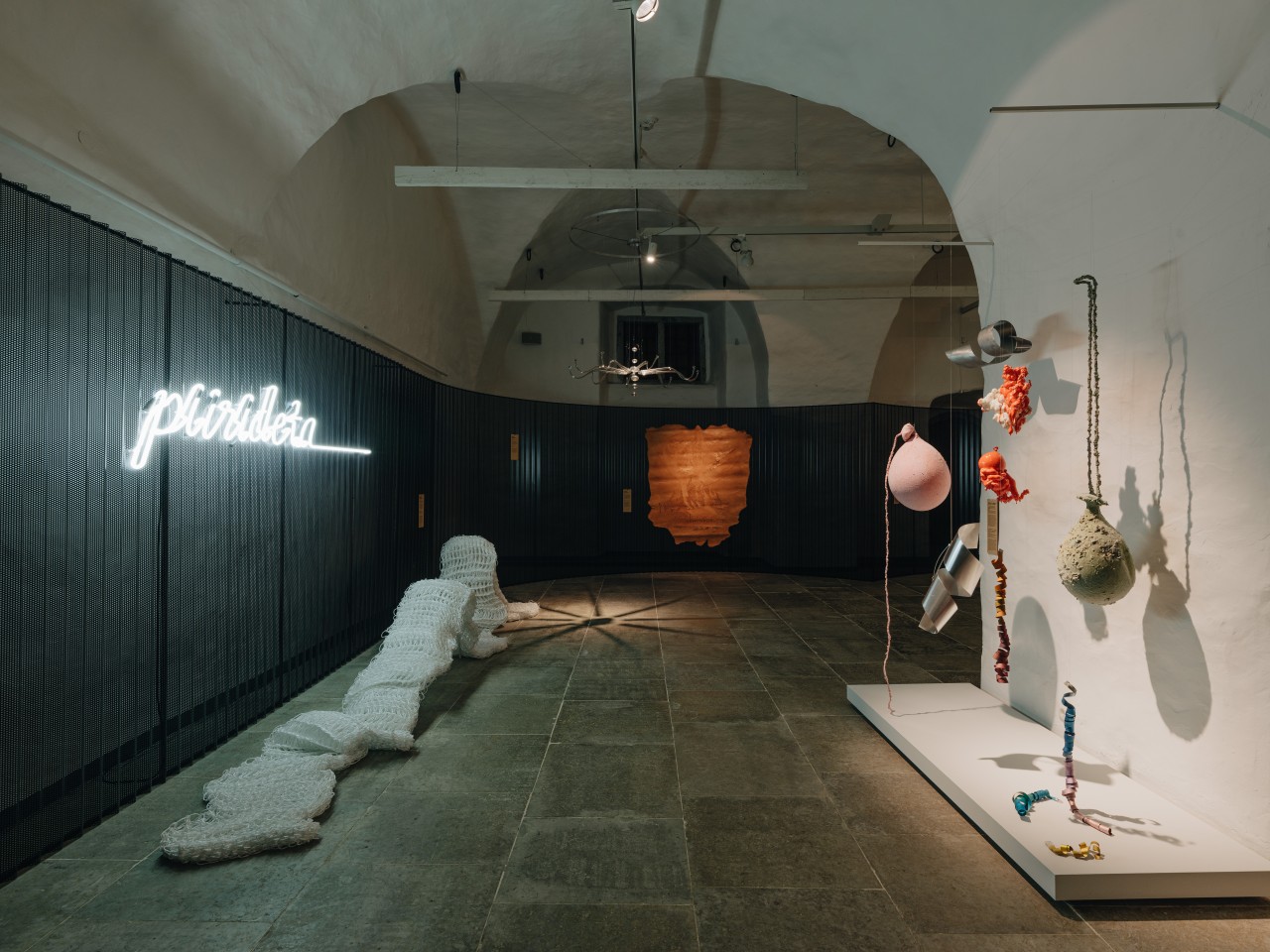
Karin Paulus: In May we opened the exhibition Between Borders, Between Materials at the Estonian Museum of Applied Art and Design (ETDM). It presents the work of contemporary art practices and artists whose work focuses, at least in part, on material. Together with Ingrid Allik, we selected artists who explore this in an exciting way and whose perspective audiences may find new and fresh. Among these were Hannah Segerkrantz, Eike Eplik, Helena Tuudelepp, Sille Luiga, and others. We included practitioners whose practice spans a variety of disciplines. There are artists who don’t belong in any one field and those who don’t define themselves within the bounds of any one area. For example, Urmas Lüüs is not only a blacksmith but moves effortlessly between and with different art practices. These artists are like children with many mother tongues, for whom the ‘different languages’ form a natural whole. At the same time, it was important for us to show that work that might be referred to as examples of new materialism are not a recent phenomenon. There are many artists from the past with an analogous approach. We found many exciting pieces from the 1970s and even earlier, such as work by Mari Rääk and Katrin Pere.
Karin Vicente: A nice comparison with bilingual people. Have you used it before? It’s so apt for describing this phenomenon.
KP: I am simultaneously working on a project where we are looking at state secondary schools. I’m partly doing it with sociologists and linguists in Narva. I am interested in in-between spaces and multilingualism or translingualism.
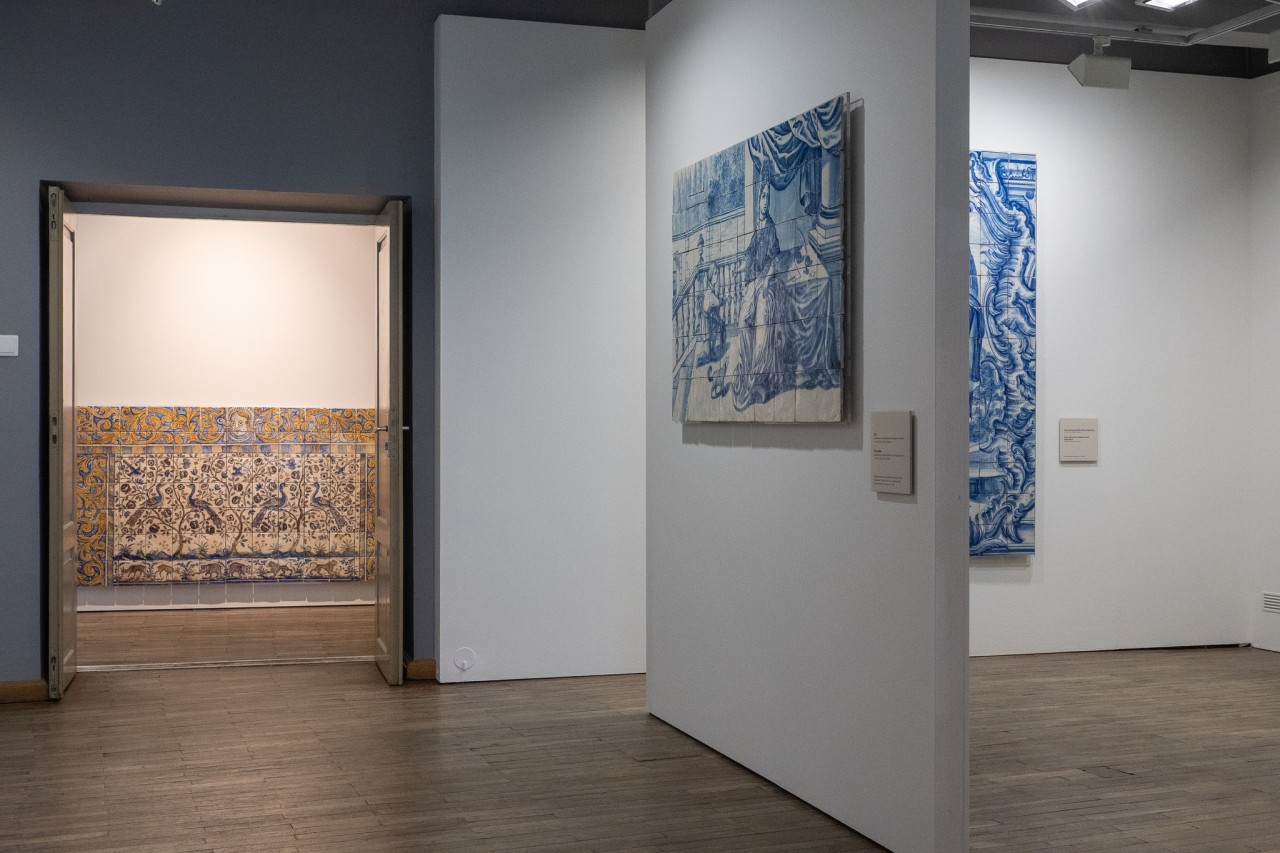
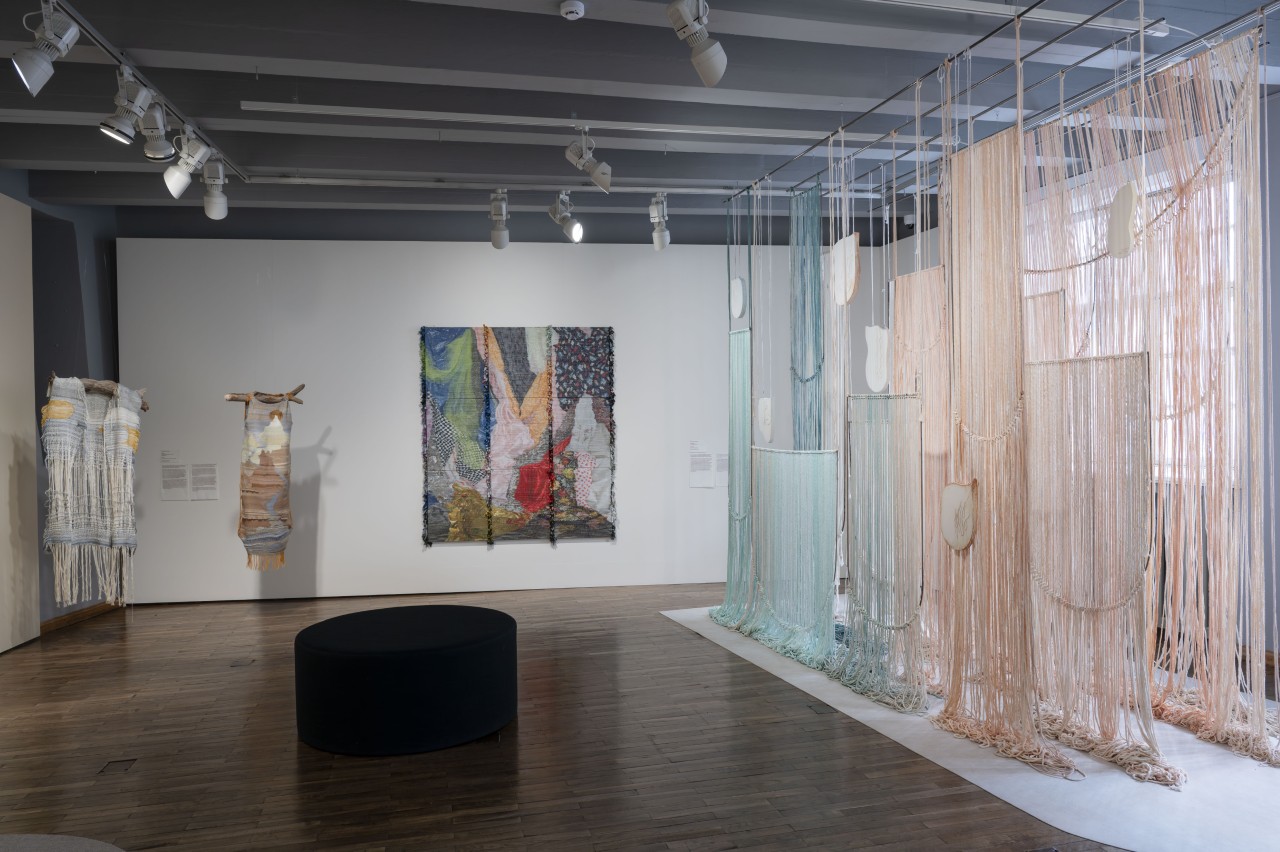
KV: Adamson-Eric Museum currently has an exhibition of Portuguese ceramic tiles called Azulejos: The Pearls of Portugal. I am one of the curators of this project [with João Pedro Monteiro]. But I’m already working on the next project – in early September we will open the exhibition The Politics of Slowness, which I am curating with Birgitta Reinert. It is an exhibition of contemporary art and focuses on slowing down. This exhibition will also include many ‘in-between’ practices. One focus looks at how many contemporary artists, in their desire to rethink their practices and work more sustainably, have returned to slow techniques, traditional technologies and materials. As a curator, I have been observing this direction in recent years and now it is unfolding through the notion of slowness. Artists in the exhibition include Tõnis Jürgens, Sten Saarits, Sandra Kosorotova, Killu Sukmit, Nele Kurvits, Lithuanian photo artist Gintautas Trimakas, Krista Vindberga from Latvia, and Julia Gryboś & Barbora Zentková – a Slovakian-Polish artist duo. There are many new works in the exhibition, as well as a work by Johanna Ulfsak from the ETDM collection.
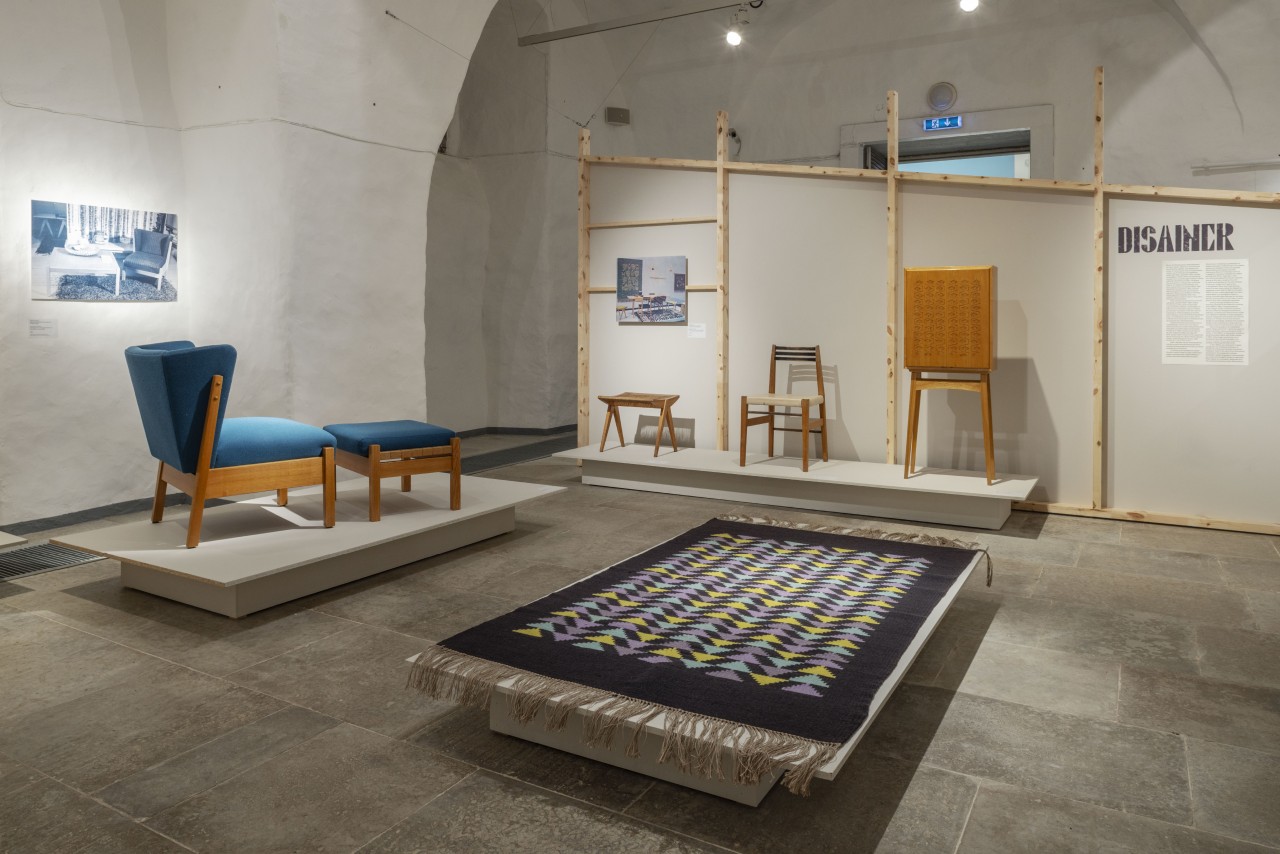
Kai Lobjakas: Perhaps it would be good to mention the exhibition Bruno Tomberg. Inventing Design, which opened last year at ETDM. I don’t often do self-analysis, but it seems that I have focused on revealing and highlighting, rather than on universal or overarching themes. Tomberg was the perfect exhibition material, if you can say that about a person. Through him it was possible to contextualise his work and many other phenomena and initiatives.
In my work, I think of the museum as a whole and less of myself as the curator, in other words, what should take place in the museum. The themes have mostly centred on phenomena and not issues or problems. I am talking about the kind of curating that has made it possible to bring to the forefront those things that have not been there yet.
KV: As someone on the sidelines, it seems to me that at ETDM you are working intensively to map and write design history, in other words, the work that has yet to be done, because in the Estonian design landscape there is so much material that hasn’t been researched, and these topics need to be captured and documented.
KL: It’s good that it comes across like that. The starting point has been to create a layer of material or a base on which to build and it has been like this for the last couple of decades. It’s important that there is material to work with and from which the right things can be extracted, highlighted and compiled at the right time. My principle has been that others can take these themes and continue working with them in the future.
SN: What is design? Formulating how you define and understand design may help us understand in what direction and on what foundations you work and how you see the design field.
KV: I can briefly say that because I work in an art museum, I don’t directly work with design. In my work I focus on unique, one-off works. Although my agenda is connected with design thinking and this field, I don’t curate design in the traditional sense. So, all the greater my joy to be invited to be part of this distinguished group. (Laughs.)
SN: Yet, you have raised such questions and organised a conference about definitions; for example, the seminar Art or Design? A Question of Definition in the Kumu Art Museum auditorium in 2021.
KV: My curatorial practice has changed somewhat over time. It’s true that at the Estonian Academy of Arts I worked at a theoretical and academic level on identity and hierarchy in the fields of art and design. And the dynamics between art, design and applied art continues to be one of my favourite topics. Previously, as a researcher I had looked, in other words as a bystander, at how the field-specific hierarchies had developed, the nature of the borders between them, their overlaps, intersections and the grey areas between. This is all very fascinating. And now as a curator I am more aware of this and try to avoid clear boundaries. I want to blur the lines between disciplines, overturn hierarchies, and normalise the grey areas. Without raising an eyebrow, I intentionally place an oil painting next to a textile work, looking for similarities rather than differences.
KL: It seems to me that the more you work in this field, the less you want to define it. There is no wrong or right, there are many options and it all depends on perspective and what and how we notice things. For me it has been exciting to observe how design is continuously growing layers, how it has changed and morphed over time. I have been at ETDM for a long time. Often, we don’t distinguish between design and applied art, and very diverse works are viewed and treated as design. We can even look at an Andres Tolts painting from the viewpoint of design. The entire surrounding world can be viewed through design. This isn’t a direct example of curating, but I really enjoyed the proposal I received a few years ago from the magazine MacGuffin. The Life of Things to write about the Baltic Chain from a design perspective for their chain-themed issue. The nature of design and its transformation can be interpreted in very different ways depending on interest and the task – and the last thing I want to do is draw lines of demarcation. It is understandable that boundaries may emerge at some point or in a specific situation but they don’t need to be drawn artificially; it’s just good to know how design has developed and changed over time.
KP: Every year I explore the question of what design is with my students. As time progresses the more complicated the question becomes, and the more I realise how multifaceted the world is and how there can be many correct answers. However, sometimes it is necessary to draw lines. If everything is design, why not architecture too; for example, software architecture or service design – the focus becomes blurred. If one thing covers everything, it means nothing, and then as I try to make sense of the terminology, I usually end up at a dead end. There are two classics that I like. One, Victor Papanek, who spoke of design as organising and creating systems. This could be the work of a dentist or writing a poem or cleaning out drawers. And the other, Ettore Sottsass, whom I met when I first started writing. He said that design is both arranging oneself and designing an object for industry. By the first he meant the way colours suit together and what clothes you choose to wear, and the other is design’s connection with business – how to design an object, its features and how it can be marketed. That meeting took place many years ago in Milan. It seemed to me that this idea, which has also been applied to reproduction and production in photography, is somehow vapid. But now I think that perhaps this does apply to design. In my bachelor’s thesis I focused on one-off, unique design, but now I understand that these are often not prototypes after all, but art. That’s where I am at the moment.
SN: What was the context of the meeting with Ettore Sottsass?
KP: I did an interview with him that appeared in Eesti Ekspress.
KL: Following on from Karin’s comment, I had a couple of thoughts. There are of course times when it’s necessary to clearly define what design is. From the perspective of someone working in a museum there is the freedom and opportunity to remain open, but naturally there are contexts where design isn’t self-evident and it’s necessary to draw lines and explain them. At the museum, together with Sandra, we run a series of lectures called When is Design? This was inspired by these questions. We endeavour to ask when something is design, rather than what it is. This is a bigger question and provides us with the opportunity to map the landscape and keep the scene multifaceted.
SN: I’d like to point out one aspect that I’ve noticed; there are shortfalls in design interpretation, especially when it is written about in culture newspapers by writers who lack a connection with the canon or when they are unfamiliar with design and applied art, its sources and contexts. For example, you read an article about a textile design exhibition and understand that the writer doesn’t know or have a feeling for this field, or that they understand it from a completely different position, which isn’t entirely wrong. You feel powerless because people are writing about subjects they can’t navigate, in contrast with the writer with a knowledge of design, design history and theory that helps them make sense of the themes presented and highlighted by the design curation.
KL: The history of design is, for us here, and elsewhere too, a very young discipline. In comparison, architecture has a solid hundred years of development in both practice and writing. And design awareness is young compared with fine art, music, and architecture. Our experience of interpreting or understanding it is shorter and perhaps design language is not yet so self-evident.
Design has come into our lives through active home and lifestyle journalism. This isn’t of course just a local phenomenon, but people associate design with certain features; for example, we speak of a designer kitchen, a designer car or a designer chair. Sometimes I’d like to ask what this other non-designer kitchen is. By ‘designer kitchen’ they mean that it has some special feature or peculiarity, or it’s shinier – these ideas aren’t disappearing anywhere. Our task is to create new meanings, so that design is understood more broadly and across more areas.
SN: Karin Vicente and Kai, you are both connected with museums – the Adamson-Eric Museum, an affiliate of the Art Museum of Estonia, and the Estonian Museum of Applied Art and Design. What typifies the exhibition programmes in these museums? Has the mission of these institutions changed over time and how?
KV: We recently celebrated the museum’s 40th anniversary. Adamson-Eric Museum has reached a dignified middle age and of course the focus has shifted, because the reality that surrounds us has changed. The museum must be resilient and keep in step with broader changes. But our core functions remain unchanged – collecting, researching and representing the legacy of Adamson-Eric. Exhibition activity is just as important and for museum workers this accounts for most of our time – mapping themes and phenomena, describing and presenting them to the public via exhibitions. Naturally, we want to address subjects that are relevant for people today. What has changed over time is the scope of our public programmes, their number and quality have grown proportionally. We produce a wide range of formats – from museum lessons to concerts, academic lectures to slow viewing tours. We want to reach different target groups. Once a year we award the Adamson-Eric Young Artist Scholarship and thereby look to the future by supporting young emerging artists.
SN: Can you touch on the historical aspect – when and why was the museum founded?
KV: The museum was opened in 1983 after Adamson-Eric’s widow, Mari Adamson, bequeathed her family’s art collection to the State Art Museum with the condition that a museum dedicated to Adamson-Eric be established. For a long time only the Eric collection was on show and our building on Lühike jalg Street was adapted to accommodate this. In the 1990s, various thematic exhibitions were organised. I’m very proud that it was in our building that the first retrospective exhibitions in Estonia dedicated to women artists were held. But we work across a range of different directions – naturally one important focus has been the work of Adamson-Eric himself, and more broadly Estonian art of the 20th century, as well as Baltic and Nordic art. We have organised numerous exhibitions introducing the work of Estonian artists in the diaspora. Another focus has been exhibitions of Japanese art and material culture. In recent years the theme of sustainability has been added to the mix and through its history there have been exhibitions of contemporary art at Adamson-Eric Museum.
And we endeavour to present Adamson-Eric’s own work from increasingly diverse points of view. For example, our current permanent exhibition introduces Adamson-Eric’s applied art and design in a more balanced way than previously. We are showing his furniture, leatherwork, jewellery and metalwork alongside his paintings, so that the connections and overlaps in his work and his artistic identity as a single whole become apparent. Adamson-Eric is mostly known as a painter, but this time we tried to do it more ‘democratically’. After all, the canon of art history is changing and reassessing its own earlier hierarchies. At the museum we want to keep up with the times.
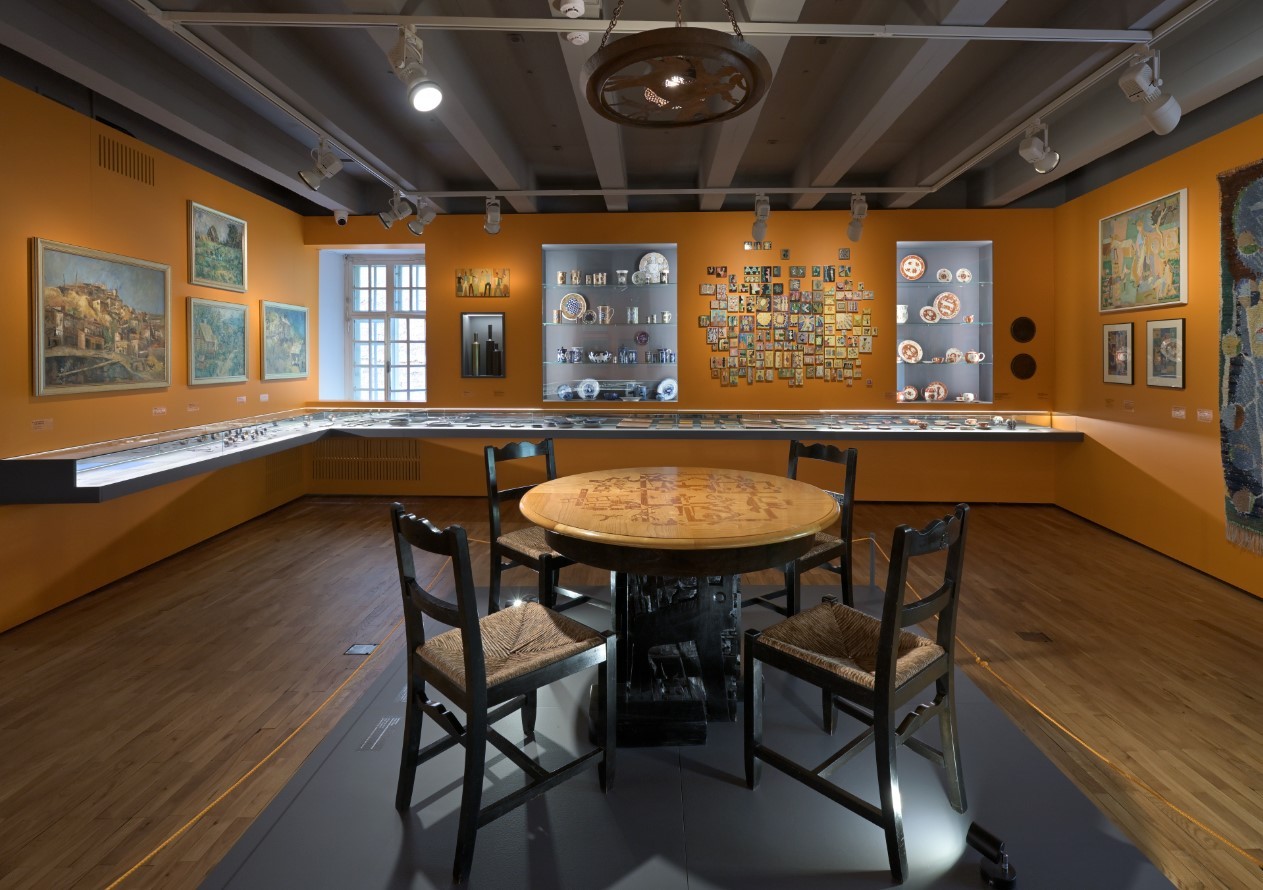
KL: That is a nice example and one that connects to some extent with ETDM and how we can look at our collections. Through the lens of fine art Adamson-Eric has held a higher position in the art historical hierarchy and it’s nice to see that he is now referred to as a designer. We are now able to look at him from a completely different perspective. Positions have shifted and our understanding and intentions have undergone a change. From our own experience the work of Eduard Taska is a good example. His work has been part of the applied art collection dedicated to unique and art objects. Today we look at Taska not only in the context of applied art but also design.
At ETDM we have worked according to one specific model that has remained relatively unchanged. We currently have two to three major temporary exhibitions a year, and maintaining a balance has been one of our greatest challenges. On the one hand, we use the retrospective format to highlight a particular artist, collective or duo and through them discuss broader themes. On the other hand, it’s important for us to have thematic exhibitions, which present more universal themes. Thirdly, since the museum’s collection has a local focus, we endeavour to broaden perspectives by including an international dimension and present a broader view of the subject we are working with. It’s important to maintain balance in the programme. The museum’s gallery provides flexibility and makes it possible to present contemporary practices. From time to time, we also bring works out from the collection to enliven the otherwise static and long-term permanent exhibitions.
SN: Could you talk about the museum’s early years in the 1980s?
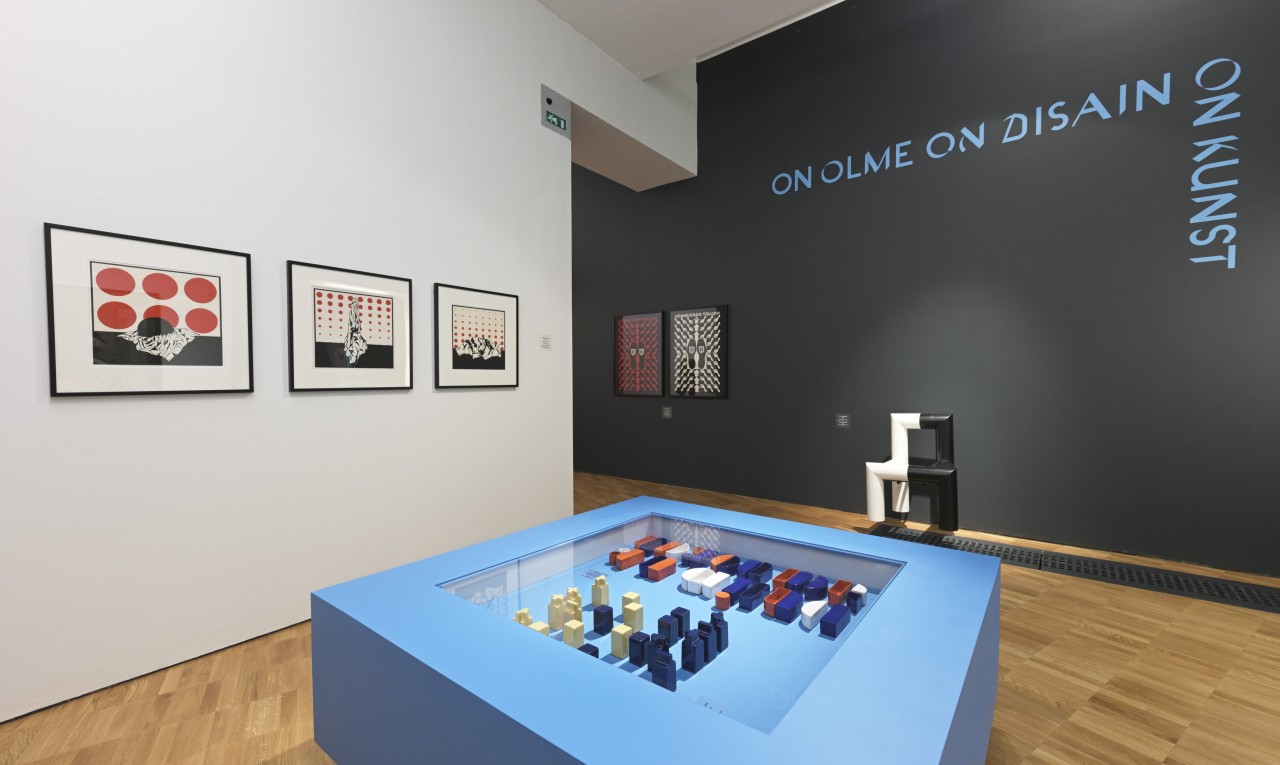
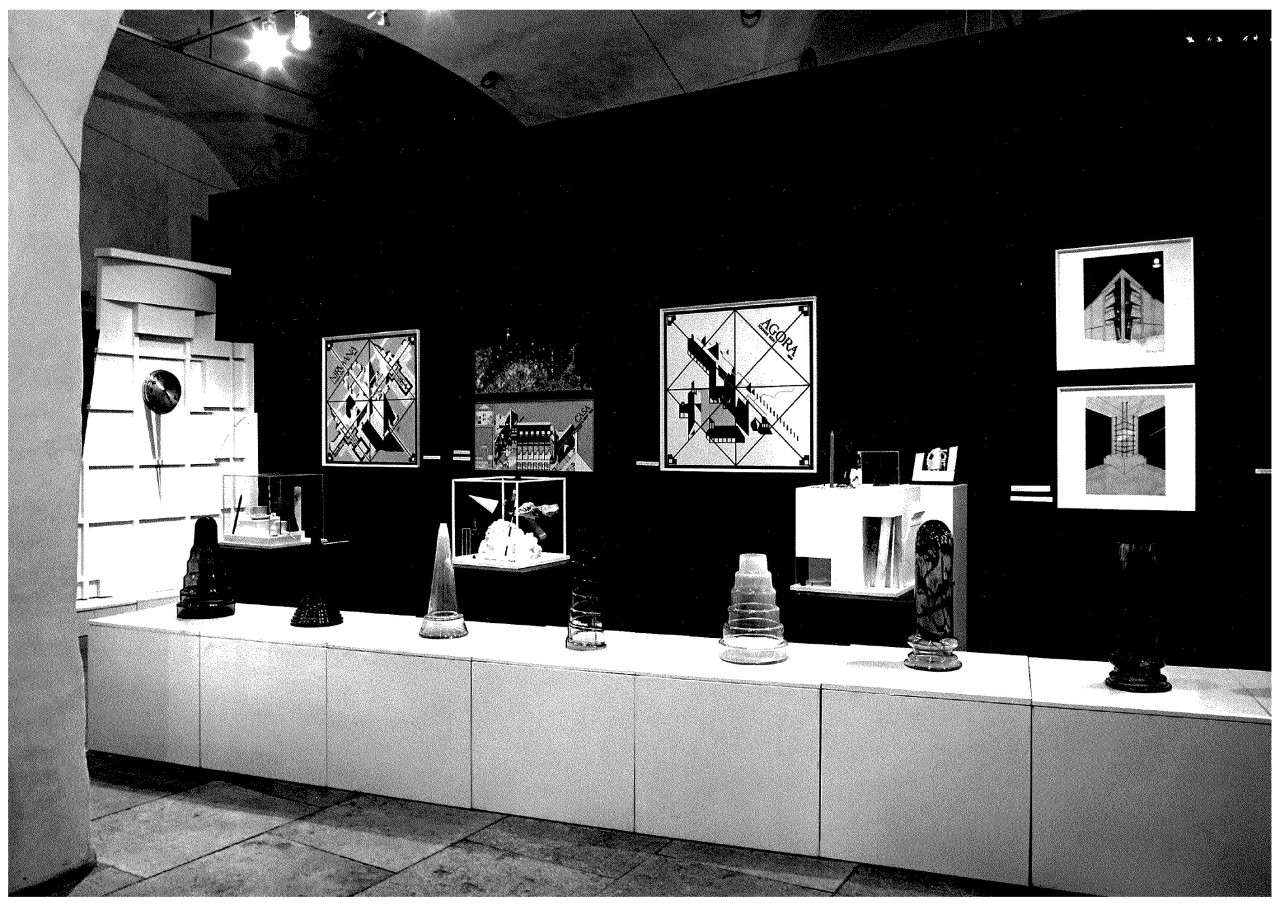
KL: The beginnings of ETDM predate the Adamson-Eric Museum slightly. It opened in 1980, the year of the Summer Olympic Games, with a permanent exhibition that showcased contemporary and historical applied art. A few years later the programme for temporary exhibitions was launched. In those days there were ten exhibitions a year establishing a rhythm that was fast-paced and dynamic – the period was characterised by frequent short exhibitions. Previously exhibitions of applied art had been held at the Tallinn Art Hall and its galleries, but now there was suddenly a new venue dedicated specifically to a discipline that had already proved itself over the decades. There was plenty to show and artists could, in the best sense of the word, produce one-off works for this space; some of which ended up in the museum’s collections. Over time the number of exhibitions has decreased. It seems that they were also aware that hosting different types of exhibitions was a way of maintaining balance because there were solo and group exhibitions, prestigious exhibitions from abroad and experimental projects, such as Form, Architecture and Applied Art (1986) curated by Leonard Lapin and including work by Jüri Okas and Kai Koppel. It was a fresh new museum, where exciting new experimental projects were shown alongside traditional applied art. The field was alive. For instance, ON-grupp artists endeavoured to move on from traditional applied art and pursue its potential with a different perspective.
Perhaps we should mention the joint project we did with Karin Paulus. When we graduated from university, we became worried – what would become of us? Karin thought we should just start working and we came up with an exhibition proposal for the Estonian National Museum. The exhibition was called Things in My Life. Soviet-era Product Design (2000), where we took the liberty to look at the material world more broadly – as we have continued to do since. The exhibition finally found its way to the Museum of Applied Art [2001]. I remember that we brought industrial design into the exhibition space, in other words Soviet-era design, which in the hierarchical art system did not belong in the upper levels and nor had it until now crossed the museum threshold. Alongside general surprise and encouragement there was a somewhat angry article from an older colleague, Helene Kuma, who questioned the appropriateness of such material in a museum. We had taken the freedom to produce an exhibition with a principle of chance, while also systematising the material.
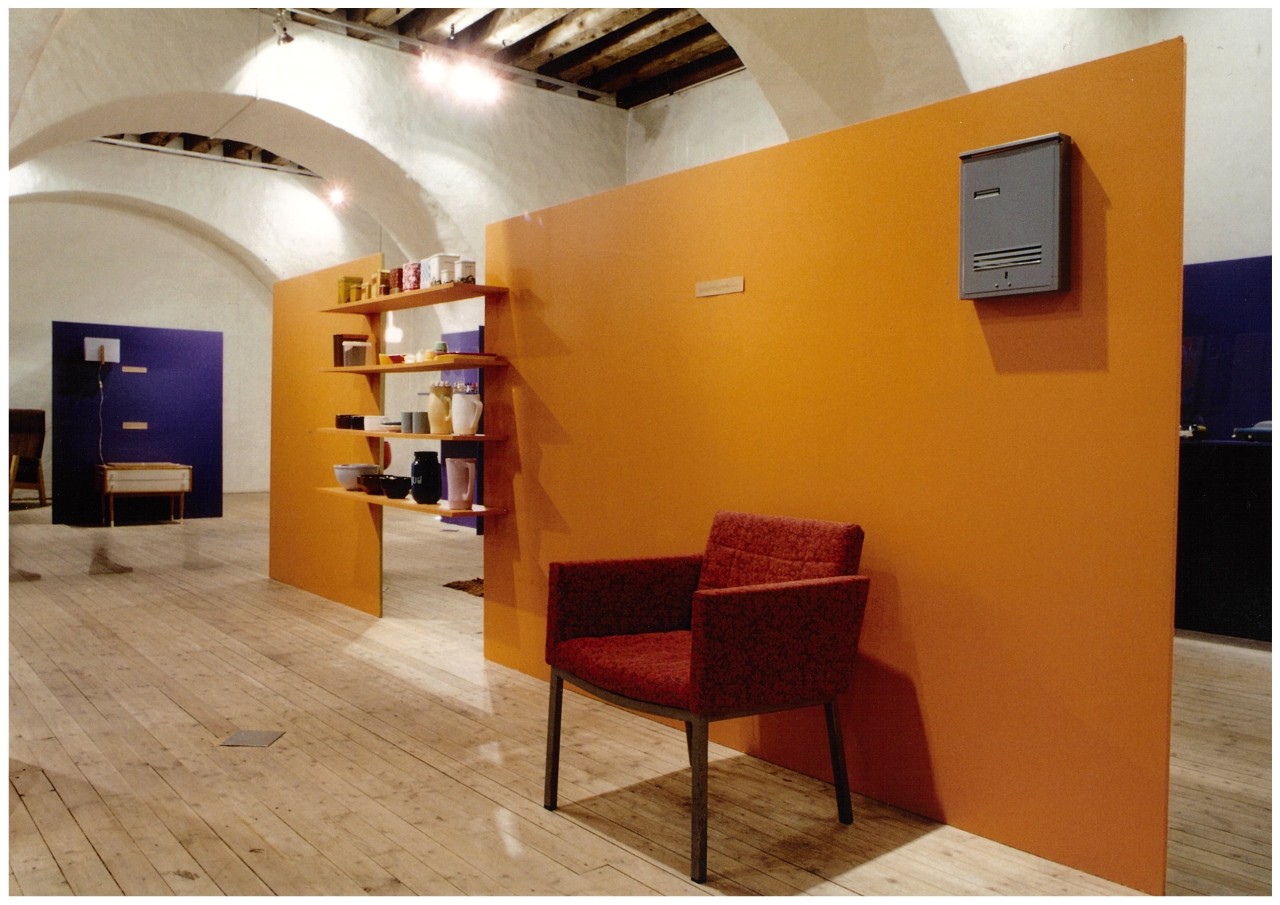
KP: The one-time great authority was irritated that the objects were not unique, that this wasn’t applied art but design. This was a complete shift in the museum’s vision, to show chairs and cupboards produced by Standard and apparently this was unsettling.
KL: Previously, the line had been drawn at pieces produced by the Art Products Factory. I have a warm feeling when I recall this because I don’t know that I’ve ever managed to irritate anyone with an exhibition. Criticism can of course be painful, especially when you feel you’ve done something wrong. But at that time the arguments seemed hollow, but it was merely a valid reaction of the time when we stepped into new territory where demarcations had not yet been drawn.
SN: Karin Paulus, you have the experience of a freelancer and in your work you move between different institutions and platforms. What are the main touchpoints of your practice?
KP: My curatorial projects have, in a sense, been of two kinds. Sometimes clients approach me with an idea in its very early stages, other times they come with a clear concept that I develop further. In recent years I have curated a variety of exhibitions at the Narva Museum, the Estonian Museum of Architecture, ETDM, and I have worked, for example, on the house museum project for the family of the architect Alar Kotli. I have also curated travelling exhibitions. I approach my work fairly pragmatically, first by listening to the employer or client to understand what they want and then I think about how to make an exhibition that would be interesting for the public and engaging for viewers.
SN: How does our field differ from what is happening in other parts of Europe or regions that you have been following? Can we draw lines or is everything fluid?
KP: In 2022, I collaborated with Tiina Sarapu and Julija Pociūtė and this resulted in two exhibitions, one in Kaunas, the other in the Tartu Art House. Travelling and curating a variety of exhibitions means we can talk about both global and local tendencies. The issues are largely based on funding – how artists and exhibitions are supported, which institutions are involved, and the work you need to do for the exhibition to reach the media or television. Every place is unique, but when we look at Europe, North America and to a certain extent Asia, then exhibition themes and issues, and artist practices are surprisingly similar. We all operate in relatively similar information spaces, with some local nuances.
KV: As a museum worker, I look at exhibitions from their behind-the-scenes aspect – how their thematic position has been developed, how the narrative unfolds in the space and how the audience experience has been shaped. I notice the texts and accompanying programmes, the exhibition design, graphic design, and so on. It seems to me that in these areas we are doing very well and even better than in some large Western museums. From a museological point of view our exhibitions have good content and are well organised. I can’t say that I have a sense of being on the periphery or a left-behind feeling.
KL: I too think we are doing well. It’s true that because of our size we have reduced capability and space, but we have plenty of diversity. It’s another matter whether we want to address certain topics and pick them up, in the way it is done elsewhere. Our connection with the rest of the world is better than ever before, so in this sense I see no problem. The question is whether we want to be relevant in some specific way – and this depends on specific positions and agendas. From the perspective of our institution, we have reason to be satisfied, but at the same time there is always a tiny sense of dissatisfaction – the feeling that there is still so much more to be done.
Positivity is indicated by local feedback, reflection and an understanding of how something can continue to unfold and what collaborations can develop in the future. The fact that the work is not a one-time exertion but grows, develops and creates something new is what brings satisfaction. And then most importantly, we are not doing it for ourselves – that would be the saddest thing.
It is important that the exhibition speaks to people. The themes are universal – for example, at Adamson-Eric – so they speak to audiences which may not be directly interested in art, but through some topic, something that touches them.
KV: We need to entice people into the art museum somehow, interpret the art into a language that the audience can understand.
KL: That is being cunning in the best possible way. In the same way, I really appreciate what the Estonian Health Museum does with their themes, whether it’s the effects of sugar or aging. From our perspective the themes to lure audiences are somewhat different. Soviet-era heritage is one way to increase audience numbers. The example of Tarbeklaas [exhibition Local Beauty. Glass Factory Tarbeklaas (2016)] may be a little overused by now but the highlighting of the work of the Tallinn Jewellery Factory worked just as well. Conceptually, these are straightforward ideas and they attract audiences.
KV: We start to work on our exhibitions many years in advance, so the ideas we present have often originated eighteen months, two years or even ten years ago. It’s nice to see how similar themes resonate internationally. We had an exhibition about handbags, and at the same time, the Victoria and Albert had a handbag exhibition. When we did a forest exhibition, Design Museum Helsinki had a forest themed exhibition. We are one global village.
SN: Now the next topic is the question of what scale we can allow ourselves. On the one hand, we can say that we have exhibitions and quite a few. On the other, in some circles I hear that there aren’t enough exhibitions on a specific topic or in their field. It seems that such questions always accompany the work of a curator. We do have curators, and you can learn to be a curator but there are relatively few researchers of design and applied art. What can we do to encourage a more mature and more design-aware field?
KV: At the museum we have very good collaboration with education institutions, especially the Estonian Academy of Arts. We offer internships and involve professionals in our projects to bring people closer to the materials and themes that are important to our museum. It is through various projects, programmes and thesis supervision and so forth, that we support people connected with the field.
And broadly speaking you can’t say there aren’t enough exhibitions in Estonia. I just looked at statistics from the Estonian Centre for Contemporary Art and in 2023 there were 950 art exhibitions in Estonia. These included one-day pop-up shows as well as permanent exhibitions, but even so, that is a huge number. I am surprised that there are sufficient audiences for all of them. But another thing is the perception of the practitioners working in the field who would like to show their work. The design field is nicely universal, and we have many museums and institutions where design is exhibited. For example, the Estonian National Museum or smaller town, history and local museums have material that we consider design, and this often forms a core part of their expositions. They don’t always instigate design discourse in the cultural-historical context, but the material is there. The Estonian Bicycle Museum and The Pram Museum would be perfect venues for exciting projects, and design discourse could be integrated into their programmes.
KP: To expand on the previous question, as a curator I would like more honest and independent responses to my work. Naturally, I’m pleased when my work is featured in news programs, but personally I long for dialogue. As a reader of not just art criticism but other fields too, I long for interpretation and exchanges of ideas. Today we live in a very visual and somehow paradoxically introverted society, and this is partly connected with the funding of cultural publications. We don’t yet have a culture of discussion, and I especially hate the proliferation of internal marketing.
SN: Do you mean critique of your work?
KP: Yes, I’d like to see analysis.
SN: Maybe this is because fees are low?
KP: I don’t know, maybe there isn’t enough of a sense of mission in society and too much egoism. We have many art history graduates, and I believe that you need to give back to society. If you have been educated with state funding, then really you should contribute by writing, for example, or through some other practical work. Perhaps this is naivety.
SN: That is, in itself, a nice idea – to bring public service into esteem. If you have been trained in a particular field you should look and notice what is happening around you. However, taking the first steps is difficult. I remember sitting as a student with my classmate Keiu Krikmann at an event at the März project space where criticism was being discussed and we heard that there is little design critique and that art history students should write it. We didn’t feel that we were ready. As a student you need preparation and support. In the end we wrote a short text in response to the event.
KP: I don’t know if you had this, but what I think worked well was the journalist editor internship – this helps to create contacts. Writing requires training – as you do it, you practice, become better and you are mentored. It can be very helpful.
KL: Expectations no doubt exceed opportunities, people and resources – to answer the first question. But what relates to exhibitions and research – of course there is a lot still to do. We shouldn’t forget that work in design has been going on for a very short time. In the local context we have been talking about design history for only a few decades, or a little more. And everything is growing and becoming more diverse. There are certainly few outlets, but we are a small country.
And regarding reception, I often feel old-fashioned. Like Karin I also feel alienated from this world of internal marketing where you have to self-promote. And seemingly it’s necessary because otherwise you don’t get anywhere and the information doesn’t spread. But here a very human reluctance comes into play – you don’t go and offer yourself as a writer, but you wait for the editor to create the situation and ask you for a specific piece.
Karin [Paulus] has journalistic experience, but for those who don’t, it can be harder – and it takes a lot of time. At the same time, the feeling that there is so much still to do always accompanies you. And then sometimes you need to conserve your energy and hold back. And hopefully there are situations where a theme is realised by someone else. For example, the exhibition Between Borders, Between Materials curated by Karin Paulus and Ingrid Allik is pure joy. Knowing that this exhibition was long-awaited for at least five years and all that time it had been on the table. You know yourself who you want there but finally you have the sense to hand it over to someone else. The outcome was very good – and perhaps this is a moment for self-critique and the realisation that you don’t need to keep everything for yourself. The main thing is to have a clear agenda and knowledge of what is needed. Often some projects are hindered by lack of funds – there just isn’t the money for an external curator. That’s why there is such joy in this kind of collaboration and it’s important to maintain a clear goal.
I feel the lack of a broader network of art institutions outside Tartu and Tallinn. Võru Gallery is a superb example, where they take travelling exhibitions and present them to their audience. I’d like to see this happen in other parts of Estonia – that it would be possible and that it would work. In Estonia there could be five to six art houses where you could host exhibitions in up-to-date conditions. Contact with art and design would become more natural and understanding would reach the people. As citizens it would be good to learn to want and demand better infrastructure. To achieve this, I’d like to see cooperation between towns, local governments and the state so we could have art spaces in the same way that we have concert halls and sports facilities. Then our work would become more accessible and natural for the public, and would not be just something we do on our own.