Published on 3.07.2026
Heng Zhi is senior lecturer and FWF post-doc researcher in the Department of Design History and Theory, University for Applied Art Vienna. She has served as curator at Vitra Design Museum, Weil am Rhein, and has curated exhibitions centred on the museum collection and European modernism. As a design researcher, she has conducted extensive field research on China’s design policy, shanzhai, and the culture of copy. Her current research focus lies in the evolving role design plays in underpinning development policies in the Global South, focusing on the cooperation and power relations between China and Africa in the field of design and digital innovation.
Taavi Hallimäe is a design researcher, lecturer and editor-in-chief of Leida. He works as a visiting lecturer in the Faculty of Design at the Estonian Academy of Arts and is a doctoral student at the Institute of Art History and Visual Culture. In 2023 he conducted research at the Department of Art Research and Media Philosophy at Karlsruhe University of Arts and Design, and in 2025 continued at the Department of Design History and Theory at the University of Applied Arts Vienna.
Design is inherently pluralistic, a quality that becomes especially apparent when examined on a global scale. The broader perspective of design provides essential vantage points for re-evaluating its often detached role within the production process. In the following interview, design historian Heng Zhi speaks with Taavi Hallimäe about her recent research visits to factories in Shenzhen, the birthplace of shanzhai copying culture, which has drawn significant attention in design discourse as a lens for critically analysing late-stage capitalism. Zhi outlines emerging tendencies among Shenzhen’s manufacturers today, particularly their growing focus on the Global South, with an emphasis on Africa.
Taavi Hallimäe: To start the interview, I’d be interested in how you would describe the phenomenon of shanzhai, which was quite popular about 20 years ago. In recent years, however, it seems that nobody is paying much attention to it. So what exactly was shanzhai, and how has it changed over time?
Heng Zhi: Well, shanzhai is a phenomenon that emerged around the early 2000s. It began with knock-off mobile phones produced by unlicensed, unbranded small workshop manufacturers, mainly in the Shenzhen area in China. It gained popularity very quickly. This was largely due to affordability. These manufacturers didn’t have brands or licenses, and they didn’t deal with intellectual property rights. They reduced costs by avoiding administrative processes and patent applications. At the same time, they were able to adapt very quickly to consumer demand – primarily the needs of low-income consumers.
A key factor was a single-chip solution for mobile phones produced by a Taiwanese company MediaTek. This chip made integrating multiple functions possible – including camera, hardware components, and software – onto one platform. As a result, even manufacturers with limited technological expertise could produce feature-rich devices. This made shanzhai products extremely popular. They captured a significant market share by the late 2000s, some estimates suggest they held about 25% of the Chinese market.
However, by the late 2010s, shanzhai gradually faded out of sight. This was partly due to the rise of smartphones which required more advanced technologies, but also due to rising income in China which made branded phones affordable to consumers. In addition, major domestic brands like Huawei and Xiaomi adopted certain shanzhai functional principles – such as rapid iteration, responsiveness to users, and open or participatory approaches – while offering more reliable products.
From a cultural perspective, shanzhai literally means “mountain stronghold” or “mountain village.” The term originates from the Ming dynasty novel Water Margin, where it refers to bandits and outlaws operating outside state control. So from the beginning, it carried a strong sense of subversion and cultural resistance. However, by the mid-2010s, shanzhai was being gradually absorbed into the mainstream narrative promoted by the Chinese state.
TH: I’m wondering – and maybe this connects to what you’re about to say – whether these large companies you mentioned acknowledge being influenced by the logic of shanzhai? Also, how does the Chinese state frame it today?
HZ: Well, I think the era in which “Made in China” was associated with copies and fakes is largely over. But we could talk about how the legacy of shanzhai still plays an important role in innovation and design in China’s manufacturing sector.
TH: Is it then still called shanzhai, or is it referred to differently now?
HZ: You don’t hear the term as often anymore. But even today, copying plays a role in the Chinese market. If we talk about the Chinese speed of manufacturing or “Shenzhen speed,” which was often mentioned when I recently visited the city of Shenzhen in China. It’s partly driven by intense competition among manufacturers. They constantly learn and copy from each other. This internal dynamic contributes to China’s manufacturing strength and surplus.
Interestingly, while debates about creativity and copying seem to have become less prominent in the Global North, questions of copying and authenticity appear to be experiencing a revival in African studies and scholarship on the Global South, particularly in relation to material cultures shaped by pirated goods from China.
TH: What I am also very intrigued by is how shanzhai has been perceived globally. In the West it used to attract people who studied in well-established art and design schools, and who were fascinated by the experimental and unconventional approach shanzhai offered. These people incorporated its ideas into their own practices. But for ordinary Chinese people during the peak of shanzhai, it was primarily about affordability and practical use. I’m really interested in this contrast between interpretations in the West and everyday experiences in China.
HZ: Yes, although shanzhai as a label is fading, its influence on creative processes in China remains significant. Shenzhen today is often compared to Silicon Valley – the “Silicon Valley of the East.” But I think there’s a fundamental difference between the two, especially in how creativity and design are understood.
In Silicon Valley, innovation is often imagined as something that happens in clean, controlled environments – designers working on expensive laptops in polished offices. In contrast, in Shenzhen, design is deeply integrated with manufacturing. It’s not separated from production – in fact, you could say it is manufacturing-led. From my experience in Shenzhen, designers work very closely with manufacturers. Some even describe it metaphorically: “Designers are so deeply embedded in the production process that they often spend half their time at the factory – sometimes even sleeping there.”
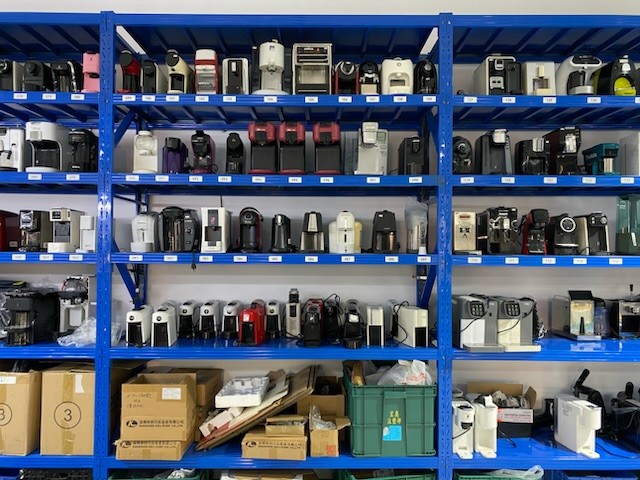
But let me give you an example. In Shenzhen I visited a local coffee capsule machine manufacturer. It’s both an OEM (original equipment manufacturer) and an ODM (original design manufacturer). Today, it is one of the leading producers of coffee capsule machines worldwide, exporting to around 90 countries, including many in Africa and the Global South. Their first machine, which they also showed me, looked like a cheap copy of a Nespresso device. But over time, they’ve become a major player in the industry, operating at a high level alongside their Western competitors. In fact, at the time of my visit they were preparing the reception of a delegation from Nespresso for sharing insights and discussing technological developments. Apparently it was an “exchange visit”, as even leading brands like Nespresso are constantly afraid of missing disruptive changes or innovations – according to their Chinese counterpart.
So the relationship evolved – a cheap imitator of Nespresso has become a serious competitor and even a strategic partner at eye level. A key part of this development was to learn through copying and studying Western products in detail. In the R&D department I was shown a wall filled with disassembled coffee machines from around the world, which were used to improve their own designs.
TH: The dynamic you describe between designers and manufacturers is quite different from what we see in the West, where much of the manufacturing has been outsourced and therefore you cannot see such collaboration.
HZ: Exactly! The coffee machine producer is just one example of how design is actually conducted there. It’s not neat, rather it is a messy and non-glamorous process. Design often happens right next to the assembly line of the manufacturer. It challenges the traditional understanding of design, which was usually based on a separation between creative work and manual labour.
TH: How open were the Shenzhen’s factories to you as a researcher? Were they willingly sharing information with you?
HZ: It depends on the scale of the company and whether it’s private or state-controlled. I also interviewed people at Huawei, for example. They were much less open than smaller manufacturers. When I asked certain questions, they were “okay, but this is information we cannot give.” (Laughing.)
TH: I’m also curious about the process of copying. At first, you have several prototypes, you work with them, dismantle them, make copies, or remake something else out of them. But at what stage do we stop calling it copying and start calling it innovation? Do companies themselves acknowledge that transition when you end up with something new?
HZ: I think it’s a gradual process. It goes back to the philosophical debate about invention versus imitation. It’s not as binary as people would think. To me, copy as a cultural space challenges the binary reading of design – the separation between creativity and imitation, head and hand, high and low, but also social and economic endeavours are put in question. By helping us arrive at a more nuanced and pluralistic understanding of design, shanzhai offers a great opportunity to go beyond the mainstream canonical narrative of design history.
Of course, companies would never openly say they are copying. For example, when I interviewed Xiaomi around 2012–2013 when I was conducting field research for my doctoral thesis, the chief designer of the company insisted that their work was 100% innovation, with no imitation or copying involved. But at the same time, Jonathan Ive from Apple publicly criticized Xiaomi for copying Apple’s designs, calling it “theft” and “lazy” rather than flattery. So there’s a clear gap between how companies present themselves and how others perceive them.
TH: During your last visit to China, you also focused on the Global South. How would you describe the relationship Chinese companies have with the region?
HZ: Chinese manufacturers have become key players, especially in African markets and across the Global South more broadly. They provide products in areas like telecommunications and energy, connecting off-grid and rural populations. These markets were traditionally considered unprofitable by Western companies because of low profit margins. But Chinese manufacturers benefited from what you could call the Shenzhen ethos – “design for the bottom by the bottom.” Shanzhai manufacturers were producing for the underprivileged groups within China, but today, many of these companies apply similar principles in the Global South.
Take mobile phones as an example. Early shanzhai phones became popular partly because of the 2-SIM card slots, allowing users to switch between two telecommunication companies, one offering better telephone, the other internet connection. Later, they also developed other kinds of functions; for example, a scanner for fake banknotes or a connection for the internet cable in Chinese hotels back in the day when we didn’t have wireless connection.
The main company which dominates the African mobile phone market today is a Chinese manufacturer called Transsion. In the West, the company is unknown, as it is for most Chinese consumers, but in Africa it has around 45% of the market share of the whole continent. One of the key features of their phones is precisely multi-SIM slots such as 4-SIM slots tailored specifically for local needs – the users are able to easily switch between different mobile plans and networks because many of them live across borders of different countries. But what also makes Transsion so popular are their extremely long battery life for areas with frequent blackouts, improved facial recognition for darker skin tones, and affordability – they specialise in making smart phones which cost from 50 to 100 US dollars. So there’s a clear link between how shanzhai manufacturers were designing for the bottom of the market in China and how they are doing it today in the Global South.
TH: What is the main component which has remained consistent with the shanzhai logic or ethos?
HZ: One reason why shanzhai was so successful was its responsiveness to consumer demand. Design and manufacturing were embedded, so the whole ecosystem of the supply chain was concentrated in the Shenzhen area. This made tailoring for consumer demand in a very short span of time possible. I think this is the same way they respond to consumer needs today, including in Africa and other developing regions. So the close integration between the creative process and manufacturing keeps on playing a defining role in the production for low-end users in the Global South.
TH: Do you detect something related to the notion of ripping off products designed by major companies in the context of the Global South, or is it out of question in the terms of today’s copyright laws? The way I think about shanzhai – and this was also the perspective of the Western designers and theoreticians – is positioning myself as a sort of underdog who has to redesign already finalised products by making them affordable or useful according to some specific situation. And in this way shanzhai has been a political activity because you’re ripping off the rich and you’re designing something which is affordable for the working class.
HZ: One important aspect is the difference between humanitarian design projects and Chinese design for the Global South. The Chinese manufacturers are not purely driven by humanitarian goals, their projects have to be profitable. For example, when describing the project to connect the last miles in rural Africa with low-cost mobile masts, a Huawei respondent emphasised that social value and market value must go hand in hand, defining it as both a business and part of its corporate social responsibility. It is possible for the Chinese manufacturers to produce with very low material costs because of the flexible supply chains. There is always a way to adjust the cost by reducing the quality of the materials or features of the product, and therefore increase the profit margin even within a very limited price range.
TH: Do you know how local governments in Africa view these Chinese companies?
HZ: That’s actually my next step to do fieldwork in Africa. I would like to research the local reactions, but also resistance. What I do know is that an increasing number of Chinese companies are relocating manufacturing to Africa, partly due to lower labour costs, but also because of the tax advantages. If you import the parts from China you would have to pay quite a big share in taxes, and therefore it’s much cheaper to manufacture in Africa.
Many of these manufacturers work with the African wholesalers who serve as a kind of market researcher for the companies, but of course the final decision remains with the Chinese R&D teams. I asked one of the lead engineers of such an R&D team if they have thought about working with the local African designers and he said that they tried that, but the problem is that African designers don’t have sufficient insight in the supply chain, and therefore also not enough insight into the material costs, which is a problem because one of the biggest issues for these companies is to reduce costs. However, this seemingly pragmatic approach excludes African players from the design and innovation process and raises broader questions about power relations and cultural divides.
There are a lot of critical issues to discuss which aren’t directly connected to shanzhai or copying. For example, what happens to the facial recognition data collected by Transsion? The government of Shanghai announced the initiative of building the biggest database for dark skin faces. What are they planning to use this data for? That’s one of the critical questions to research.
TH: Would you say the focus on the Global South is directly supported and encouraged by the Chinese government? Perhaps as a form of soft power, it’s a way of strengthening China’s global influence, especially in regions where Western actors are retreating? How strong is the connection between the companies and China’s international politics in this context?
HZ: Yes, there is definitely policy support encouraging Chinese companies to go out to compete and export to developing markets through design. For example, in 2021, the Chinese government introduced the “Go-out” design policy as part of its broader Belt and Road Initiative. Officially titled “Notice by 19 Ministries on Promoting the High-Quality Development of Overseas Design Consulting Services”, encouraging the joint outsourcing of design and manufacturing, and in 2022, the policy document “Opinions on Promoting the High-Quality Development of International Cultural Trade”, focusing on the expansion and upgrading of cultural and creative goods in international trade.
Traditionally, technology transfer moved from industrialised countries like those in Europe and the United States to Asia – first to Japan and Singapore after World War II, then to China and other Asian countries. This technology transfer process mostly involved lower-end technologies.
But China today seems to be keeping both ends of the spectrum. It is developing high-end innovations like AI and humanoid robots, while also continuing to produce low-end goods such as clothing and basic consumer products. Due to large-scale automation, less manual labour is needed, which creates a surplus in manufacturing capacity. This is one of the reasons Chinese companies are expanding abroad, many of them targeting the low-end markets in the Global South.
TH: At the moment we’ve been talking mostly about large companies with their own factories, R&D and significant resources. Yet shanzhai originally referred to a more grassroots approach – something accessible to ordinary people outside formal industrial systems. Are there still artistic or independent practices today that relate to shanzhai culture while being outside the corporate or political structures?
HZ: As an explicit phenomenon, shanzhai is largely gone. One reason for its decline, as I said in the beginning, is that it was absorbed into the mainstream narrative by the government. The Chinese government was at some point talking about shanzhai at the National People’s Congress, framing it as a Chinese mode of innovation.
In the 2010s, the government heavily promoted creative industries, including design. Many state-sponsored platforms and spaces were created, but they needed content. As a result, a lot of Western objects, products and approaches were imported, but there was also a need to define something distinctly Chinese, something that could distinguish the Chinese dream from the American dream, and shanzhai became really useful.
Initially, and especially in the cultural sphere, shanzhai as a phenomenon was infused with a strong element of resistance, subculture, and even subversion against authority and government, but slowly as it was absorbed into the mainstream, that critical edge largely got lost. I would say design played a mediating role in this process, bridging the gap between the top and the bottom.
One illuminating moment was when the chief designer from a well-known Shanghai studio asked me, “Why not copy?” He argued that shanzhai based producers were actually doing better human-centred design because they were more closely connected to the needs of underprivileged users. For instance, he gave me the example of a mobile phone his studio designed with six loudspeakers which covered the entire back of the phone. It was designed for elderly people exercising in parks, as well as construction workers listening to music during breaks. The Shanghai designer said that academic designers like himself would rarely identify such needs in low income consumers, but shanzhai practices made these demands visible.
In that sense, design acted as a mediator, translating grassroots needs into mainstream production. Eventually, even major national brands began producing similar phones with loudspeakers. In that sense, design is not innocent.
TH: Regarding the question “Why not copy?”, do the Chinese companies copy each other today?
HZ: Yes, they definitely still do. During my research in Shenzhen talking about the “Shenzhen speed”, a designer actually said that if you have a successful product – especially in home appliances – it quickly appears on platforms like Taobao, the Chinese Alibaba. And if it happens to be a good product, it will get copied by the competitors within a very short time frame. The Chinese manufacturers have a really short time slot, two to three months, to make their profit, until the other companies manage to develop the same tools to imitate and produce the same product. In Shenzhen this process is accelerated. Instead of traditional prototyping, companies release finished products quickly and let the market act as a testing ground. It’s rapid prototyping through finished products – the manufacturers basically let the product hit the market and let the market do the research and then improve the product afterwards. But of course, environmentally and for the climate, it’s a very irresponsible way to act.
In general, it’s a kind of love-hate relationship among Chinese design policymakers and designers when it comes to copying. I would say the barrier to talking about copying or learning, if you like, is relatively low. During the heyday of shanzhai, people would often ask “Why would you say copying? We’re learning!” So it’s a complex relationship also due to colonial history and that’s one aspect I am currently trying to cover in a journal article I am writing. So basically, the Chinese design history can be traced back to the mid-19th century with industrialisation, which for China was started by an external force – particularly because of the Opium War. At that point, the Chinese realised that they cannot continue doing things as they were used to. There was this famous Westernisation Movement, also known as the Self-Strengthening Movement. Its main slogan was “learn from the foreigners to gain command of them.” In this context, copying or learning wasn’t seen as something shameful. On the contrary, it was seen as an act of self-empowerment, even as a kind of decolonial strategy.